
Ear Infections: Causes, Symptoms, and Treatment Options
Ear infections can affect different parts of the ear. The two most common types are:
Middle ear infections (otitis media): Happen when fluid gets trapped behind the eardrum, often after a cold or other upper respiratory infection.
Outer ear infections (otitis externa): Occur in the ear canal, often when the skin becomes irritated, dry, or cracked.
Ear infections may be acute (short-term) or chronic (persistent or recurring).
Middle ear infections (otitis media): Happen when fluid gets trapped behind the eardrum, often after a cold or other upper respiratory infection.
Outer ear infections (otitis externa): Occur in the ear canal, often when the skin becomes irritated, dry, or cracked.
Ear infections may be acute (short-term) or chronic (persistent or recurring).
What causes ear infections?
Otitis media is the medical term for inflammation or infection of the middle ear. Most middle ear infections are caused by viruses or bacteria, typically following a cold, sinus infection, or other upper respiratory illness.
Here’s what’s happening inside the ear:
The eustachian tube is a small canal that connects the middle ear to the back of the nose and throat.
Its job is to equalize pressure and drain fluid from the middle ear.
When you’re sick, the eustachian tube can become swollen or blocked, trapping fluid behind the eardrum.
That trapped fluid can build pressure (causing pain) and can become infected.
Why are children more prone to ear infections?
Children get ear infections more often because:
* Their eustachian tubes are smaller and more easily blocked.
* In young children, the tubes are more horizontal, so fluid doesn’t drain as efficiently.
* Their immune systems are still developing, making it easier for infections to take hold.
If an infection doesn’t fully resolve or keeps returning, it may be considered chronic.
Common symptoms of a middle ear infection include:
* Ear pain or a feeling of pressure/fullness
* Fluid drainage from the ear
* Low-grade fever
* Temporary hearing changes (muffled hearing)
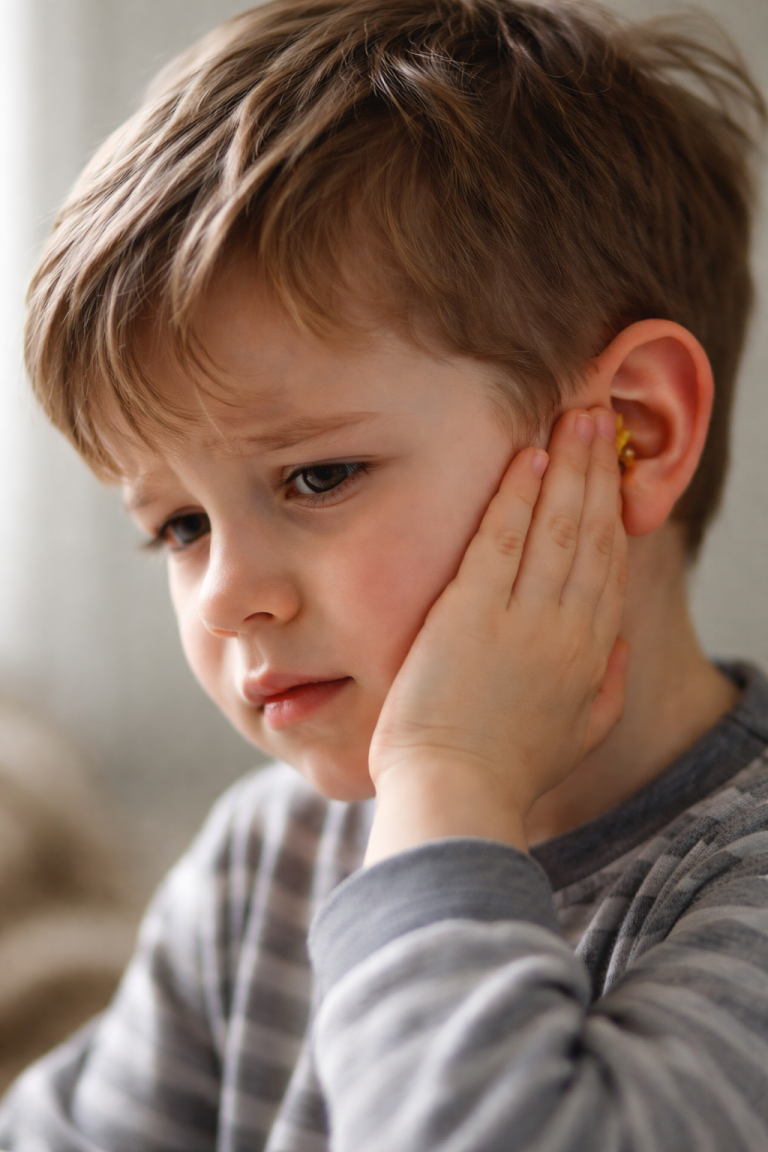
Babies and toddlers may not be able to describe ear pain. Signs can include:
* Increased fussiness or cryin
* Trouble sleeping
* Refusing to eat or difficulty feeding
* Pulling or tugging at the ear
Symptoms may be milder in chronic infections, but they still deserve medical attention. Early treatment can help reduce the risk of ongoing problems.
How ear infections are treated
Treatment depends on age, symptoms, and whether the infection is likely viral or bacterial.
At-home symptom relief to help ease discomfort:
* Apply a warm compress (like a warm washcloth) to the affected ear.
* Use pain relievers such as acetaminophen or ibuprofen as directed.
* Avoid aspirin in children, as it can be unsafe.
Medical treatment
If a bacterial infection is suspected or symptoms persist, a clinician may prescribe antibiotics. If antibiotics are prescribed, it’s important to take them exactly as directed and finish the full course, even if symptoms improve.
When ear tubes may be recommended
If infections are frequent or fluid doesn’t clear, a provider may discuss ear tubes (tympanostomy tubes). These tiny tubes are placed through the eardrum to:
* Improve ventilation
* Help fluid drain
* Reduce repeat infections
* Support hearing
Tubes often stay in place for 6 to 18 months and usually fall out on their own. If they don’t, they can be removed.
Possible complications
* Most ear infections improve with proper care, but untreated chronic infections can lead to complications, including:
* Hearing loss
* Damage to the small bones in the middle ear
* Balance issues
* A middle ear cyst called a cholesteatoma
* Facial nerve problems
* Rare but serious spread of infection
That’s why evaluation and treatment are important, especially when symptoms are severe, persistent, or recurring.
Prevention tips
* You can’t prevent every ear infection, but these steps can lower risk, especially in children:
* Breastfeed when possible
* Keep vaccinations up to date
* Practice good hygiene (regular hand-washing)
* Avoid exposure to tobacco smoke
* Choose smaller daycare settings when possible to reduce germ exposure
When to call a doctor
* Seek medical care if you or your child has:
* Severe ear pain
* Fever that persists
* Drainage from the ear
* Symptoms lasting more than a couple of days
* Frequent infections or concerns about hearing
Early care can help relieve symptoms and prevent long-term issues.
Call Somnosleep at (703) 988-7562 for more information or request an appointment online now.